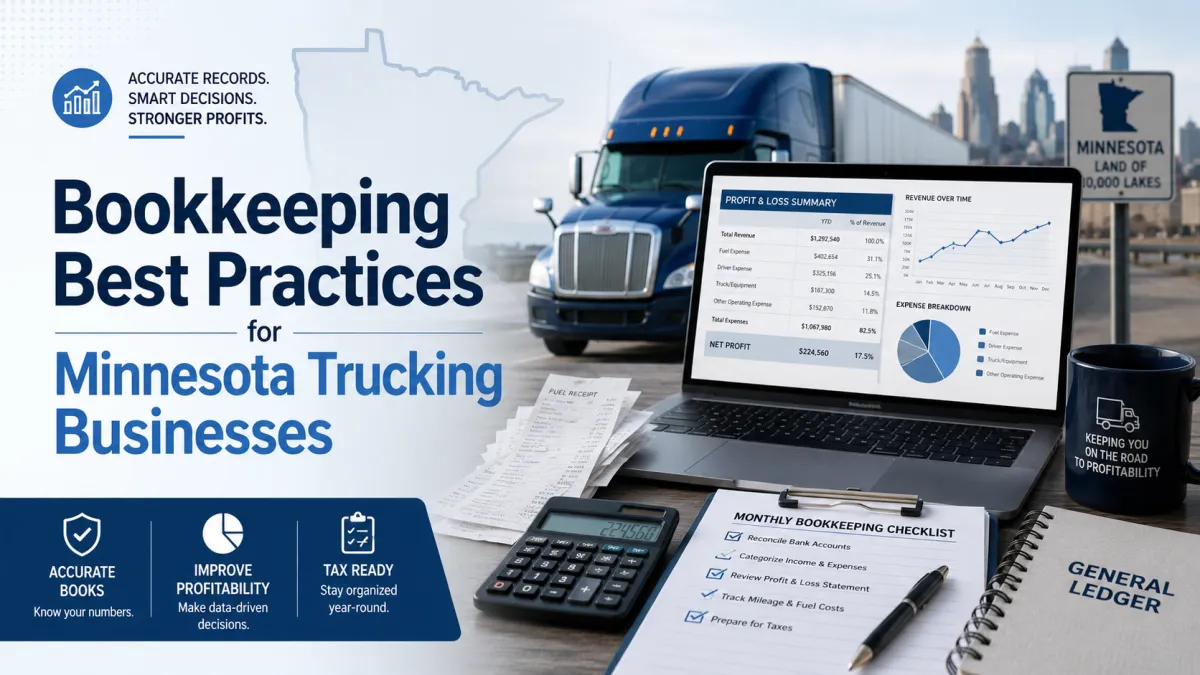
Bookkeeping Best Practices for Minnesota Trucking Businesses
How Minnesota Trucking Companies Build Strong Bookkeeping Foundations
Strong bookkeeping is one of the most important foundations for a successful trucking business. For Minnesota trucking companies, accurate books support tax compliance, improve cash flow visibility, and make it easier to understand whether the business is truly profitable.
Why Bookkeeping Matters in Trucking
Trucking businesses manage a wide range of expenses, including fuel, repairs, payroll, insurance, permits, and equipment costs.
Without a reliable bookkeeping process, it becomes difficult to track margins, prepare for taxes, and make informed decisions.
Separate and Categorize Expenses Correctly
A strong bookkeeping system starts with clear expense categorization. Trucking companies should consistently separate fuel, maintenance, payroll, insurance, tolls, permits, and other operating costs so reporting stays accurate.
Reconcile Accounts Every Month
Monthly reconciliations help catch errors early. Bank accounts, credit cards, loans, and major expense accounts should be reviewed regularly so the books stay current and reliable.
Track Profitability With Better Reporting
Bookkeeping should do more than record transactions. It should help owners understand revenue trends, cost patterns, and profitability over time.
Monthly reporting gives better visibility into where the business is performing well and where adjustments may be needed.
Keep Tax Readiness in Mind All Year
When books are clean throughout the year, tax preparation becomes much easier Organized bookkeeping reduces stress, improves deduction tracking, and helps avoid rushed cleanup work during filing season.
Support Growth With Better Financial Systems
As a trucking company grows, bookkeeping becomes even more important. Better systems support hiring, equipment planning, financing conversations, and long-term decision-making.
Frequently Asked Questions (FAQ)
What bookkeeping categories matter most for trucking businesses?
Fuel, repairs, maintenance, payroll, insurance, permits, equipment, and contractor-related expenses are some of the most important categories.
How often should trucking companies update their books?
At a minimum, bookkeeping should be reviewed monthly. More frequent updates may be helpful for businesses with higher transaction volume.
Why do trucking companies struggle with bookkeeping?
Many struggle because of delayed recordkeeping, inconsistent categorization, and lack of a repeatable monthly process.
Take Action Today
If your Minnesota trucking business wants cleaner books, better financial reporting, and less tax-time stress, improving your bookkeeping process is one of the best places to start.